
About Us
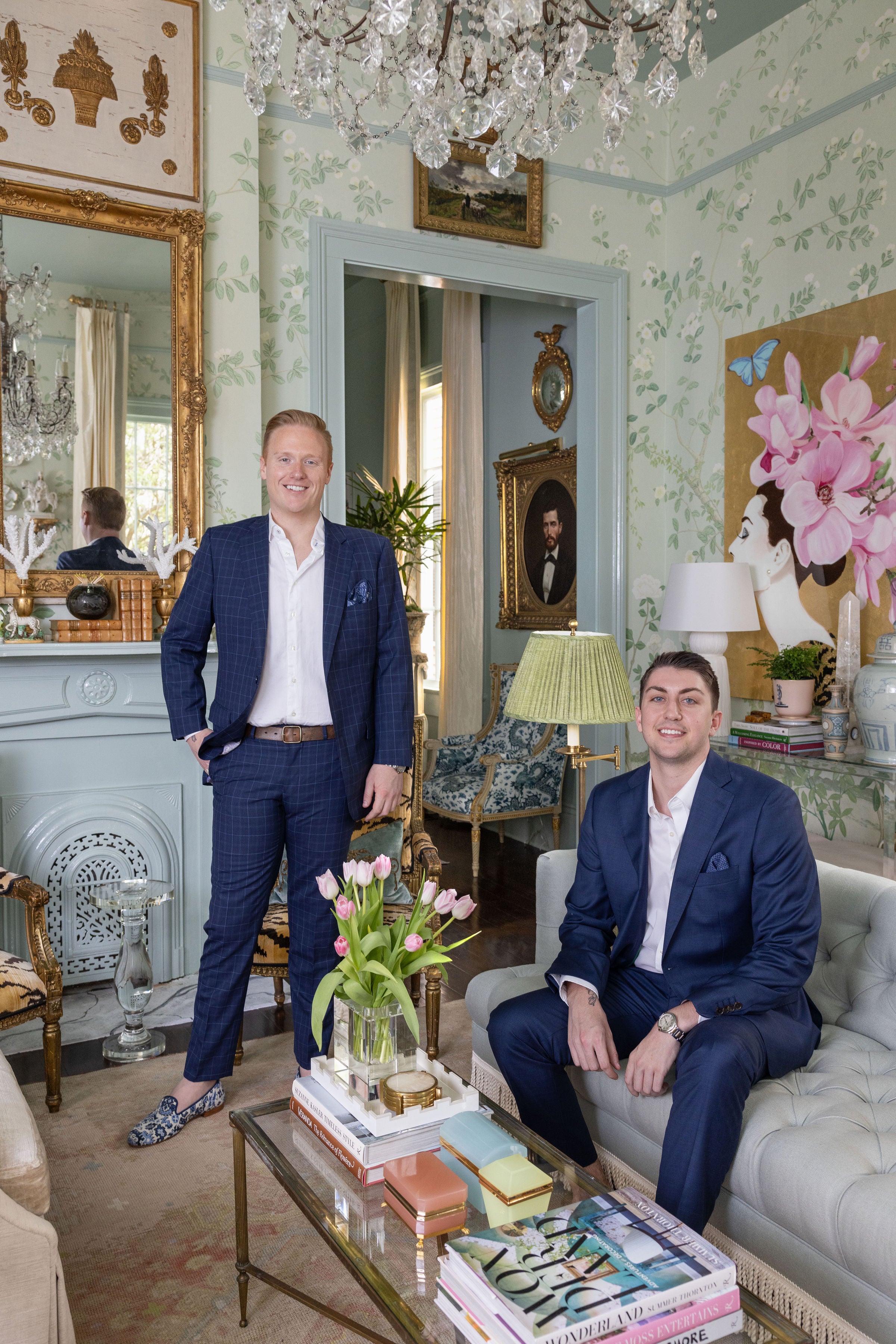
Ryan Tyler Dunagan & Grant Tate
Founders, Tyler + Tate
Ryan Tyler Dunagan and Grant Tate are the founders of Tyler + Tate, the New Orleans interiors and lifestyle destination known for its distinctive mix of fine furnishings, antiques, decorative objects, art, and fashion.
Together, they have developed a point of view that is at once distinctly Southern and decidedly worldly—rooted in an appreciation for gracious living, classical design, craftsmanship, and the belief that the most compelling interiors should feel collected over time rather than decorated all at once.
Ryan Tyler Dunagan
Ryan Tyler Dunagan brings to Tyler + Tate a sophisticated eye for presentation, merchandising, textiles, and the art of creating an environment. His sensibility is informed by a lifelong appreciation for architecture, antiques, gardens, travel, fashion, and the traditions of Southern living, balanced by an instinct for introducing the unexpected.
In 2018, Dunagan founded Fox & Hen, his women's boutique centered around high-fashion Indian block prints and a spirited approach to color, pattern, and personal style. Since its establishment, Fox & Hen has continually evolved, reflecting Dunagan's ability to reinterpret traditional craftsmanship through a fresh and contemporary lens. The boutique's distinctive textile-driven aesthetic has become an important extension of his broader creative point of view.
That understanding of fashion, pattern, and presentation translates naturally into Dunagan's approach to interiors. He views a room much as one might consider a beautifully assembled wardrobe: individual pieces need not match, but together they should tell a compelling and deeply personal story.
Dunagan approaches interiors with an emphasis on atmosphere as much as individual objects. He believes a successful room should reveal itself gradually—through layers of art, books, textiles, furnishings, and objects that possess character and meaning. Rather than pursuing perfection, his rooms favor personality: elegant but never precious, considered without appearing overly composed.
His perspective has been instrumental in shaping the visual identity of Tyler + Tate, where antique and contemporary pieces are deliberately juxtaposed and objects are selected not simply for pedigree, but for their ability to bring individuality, beauty, and interest to a room.
Grant Tate
Grant Tate's design sensibility was refined through his experience in New York, where he worked with acclaimed designer Marshall Watson of Marshall Watson Interiors. His time there provided an important foundation in sophisticated residential design and strengthened his understanding of proportion, scale, color, textiles, craftsmanship, and the subtle layering that distinguishes exceptional interiors.
Tate brings that foundation to Tyler + Tate with a particular appreciation for the decorative arts and for furnishings and objects of enduring quality. His eye gravitates toward pieces with provenance, craftsmanship, and permanence—whether an important antique, an artisan-made object, a finely upholstered chair, or something simply remarkable enough to command attention.
While respectful of the traditions of classical decorating, Tate is equally interested in keeping interiors relevant and alive. His rooms are intended to evolve, allowing old and new, formal and relaxed, and important and unexpected pieces to coexist naturally.
Tyler + Tate
It is the combination of these two perspectives that defines Tyler + Tate.
At their Magazine Street destination in New Orleans, Dunagan and Tate have created an ever-changing collection that reflects the way they themselves approach interiors: confidently mixing periods, provenance, color, texture, and price points while maintaining an uncompromising eye for beauty.
Neither subscribes to the idea of a prescribed "look." Instead, they believe the most memorable homes are deeply personal—built slowly through travel, discovery, inheritance, curiosity, and the acquisition of things one genuinely loves.
For Dunagan and Tate, luxury is ultimately less about formality or excess than discernment: knowing what is worth keeping, recognizing beauty in unexpected places, and creating rooms that become richer, more interesting, and more personal with time.